
Scaling an iGaming SEO operation across multiple international jurisdictions demands an enterprise-grade tool stack. Relying on manual data collection or generic marketing software is insufficient when tracking thousands of dynamic keywords, auditing JavaScript-heavy casino platforms, and monitoring highly volatile search engine result pages (SERPs). To maintain visibility and intercept commercial intent before competitors, operators and affiliates must deploy specialized tools that automate technical health checks, execute programmatic keyword clustering, and validate backlink integrity at scale.
Keyword Research and Clustering Tools
Finding Casino and Betting Keywords by Market
Traditional keyword research tools like Ahrefs and Semrush provide a baseline, but they notoriously underestimate search volumes in emerging or non-English iGaming markets. When targeting specific geographic regions—such as optimizing localized campaigns in Uzbek, Portuguese, French, or Dutch—relying purely on standard global databases results in missed opportunities.
Accurate keyword discovery requires scraping localized SERPs directly to capture real-time search demand. When planning content around major seasonal events, such as the Asian Games or the Azerbaijan Grand Prix, webmasters must use tools like Yandex Wordstat (for CIS markets), Google Ads Keyword Planner (bypassing broad match limits using API access), and localized autocomplete scrapers. These tools uncover the exact vernacular and long-tail betting queries users deploy in specific regions, such as localized slang for slot machines, mobile application downloads, or cryptocurrency deposit methods.
Clustering Search Queries and Mapping Keywords to Pages
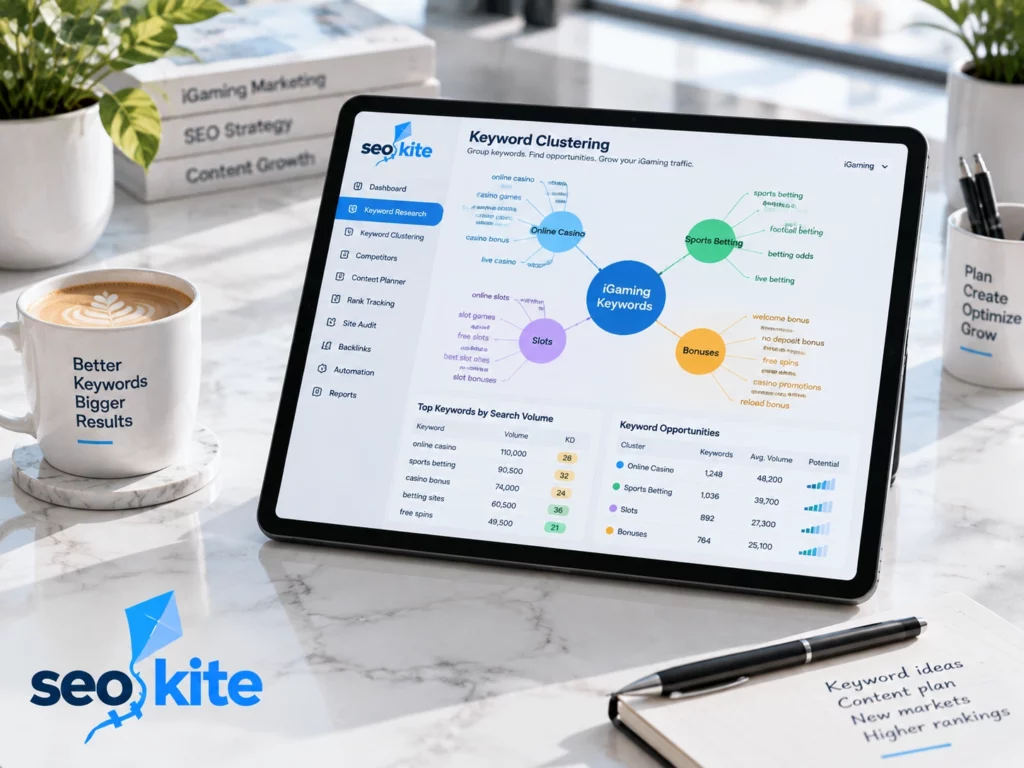
Executing keyword research generates thousands of raw terms that must be intelligently organized to prevent keyword cannibalization. Keyword clustering tools analyze search intent by scraping the top 10 SERP results for every query and grouping keywords that trigger the exact same competing URLs.
KeywordInsights / Surfer SEO
These platforms automate the clustering process, grouping transactional queries (e.g., “fast payout casino”) separately from informational queries (e.g., “how long do withdrawals take”).
Custom Python Scripts
Advanced teams utilize Natural Language Processing (NLP) scripts via the Google Cloud API to map intent directly to site architecture, ensuring that distinct clusters are assigned accurately to parent categories, sub-categories, or long-tail blog posts without semantic overlap.
AI Tools for iGaming Content Optimisation
Analysing Competitor Content and Closing Topic Gaps
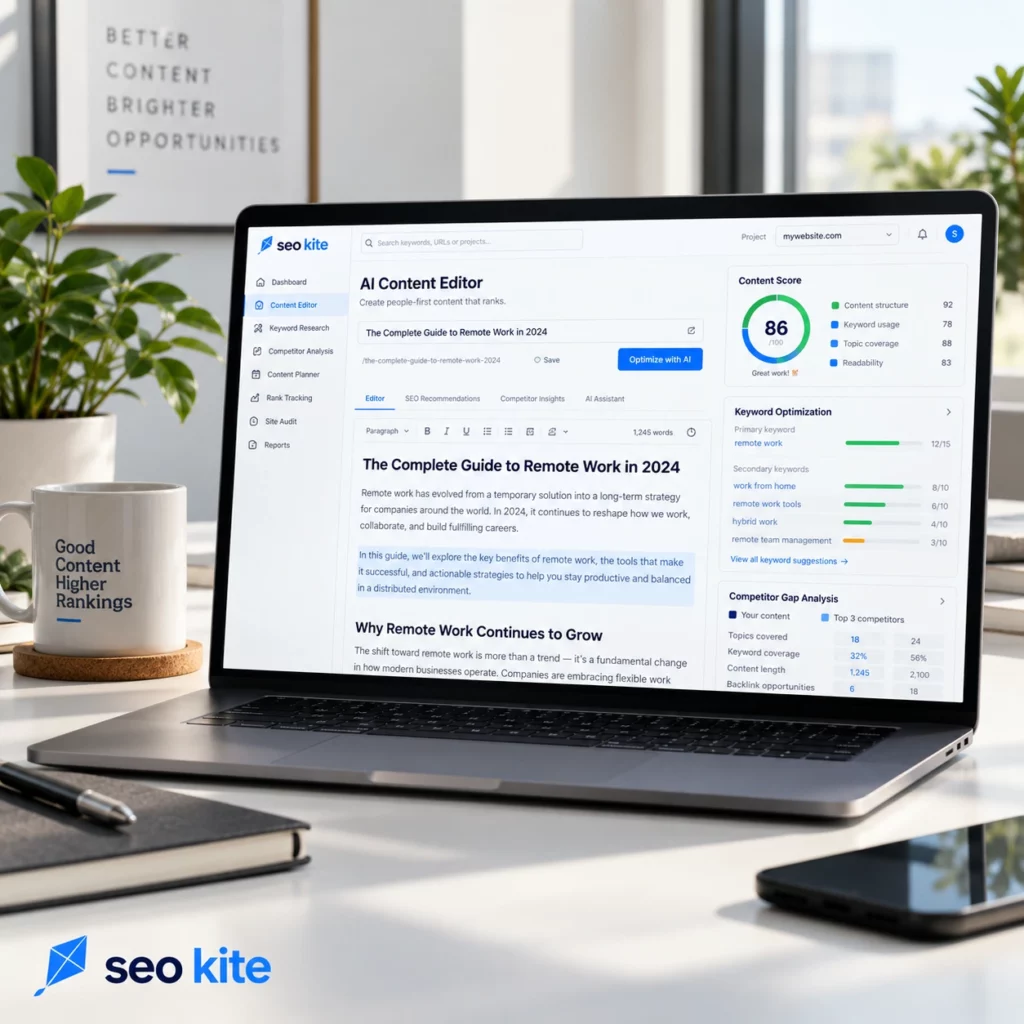
To outrank established operators, content must be mathematically more comprehensive than the current top-ranking pages. Content optimization tools like Clearscope, MarketMuse, and Surfer SEO utilize NLP algorithms to reverse-engineer competitor content structures. They analyze the exact entities, H2/H3 header hierarchies, and LSI (Latent Semantic Indexing) keywords utilized by the winners in a specific SERP.
By comparing your draft against these top-ranking benchmarks, these tools instantly highlight topic gaps. If a casino review fails to mention specific software providers, RTP (Return to Player) percentages, or regulatory licenses that all top five competitors feature, the tool flags these omissions, allowing editorial teams to inject the missing entities before publication.
Optimising Casino Reviews and Localising Content
Large Language Models (LLMs) and advanced AI toolsets drastically accelerate the deployment of regional metadata and structured content outlines. While raw AI text should not be published without rigorous human editing, AI tools excel at operational structuring and localized adaptation.
| Use Case | AI Tool Integration | Output / Execution |
| SEO Metadata Generation | Claude 3.5 / ChatGPT Plus | Programmatic generation of localized title tags and meta descriptions tailored to specific brand review parameters in Italian, French, or Portuguese. |
| Content Structuring | Custom GPTs / API scripts | Building robust article frameworks utilizing strict H1, H2, and H3 hierarchies for app download guides or sports betting events. |
| Visual Asset Creation | Midjourney / DALL-E 3 | Designing precise 16:9 aspect ratio image generation prompts to create custom visuals for articles covering cryptocurrency transactions, Portuguese gambling films, or French betting books, bypassing generic stock photos. |
Technical SEO Audit Tools
Detecting Crawling, Indexing, and Rendering Issues
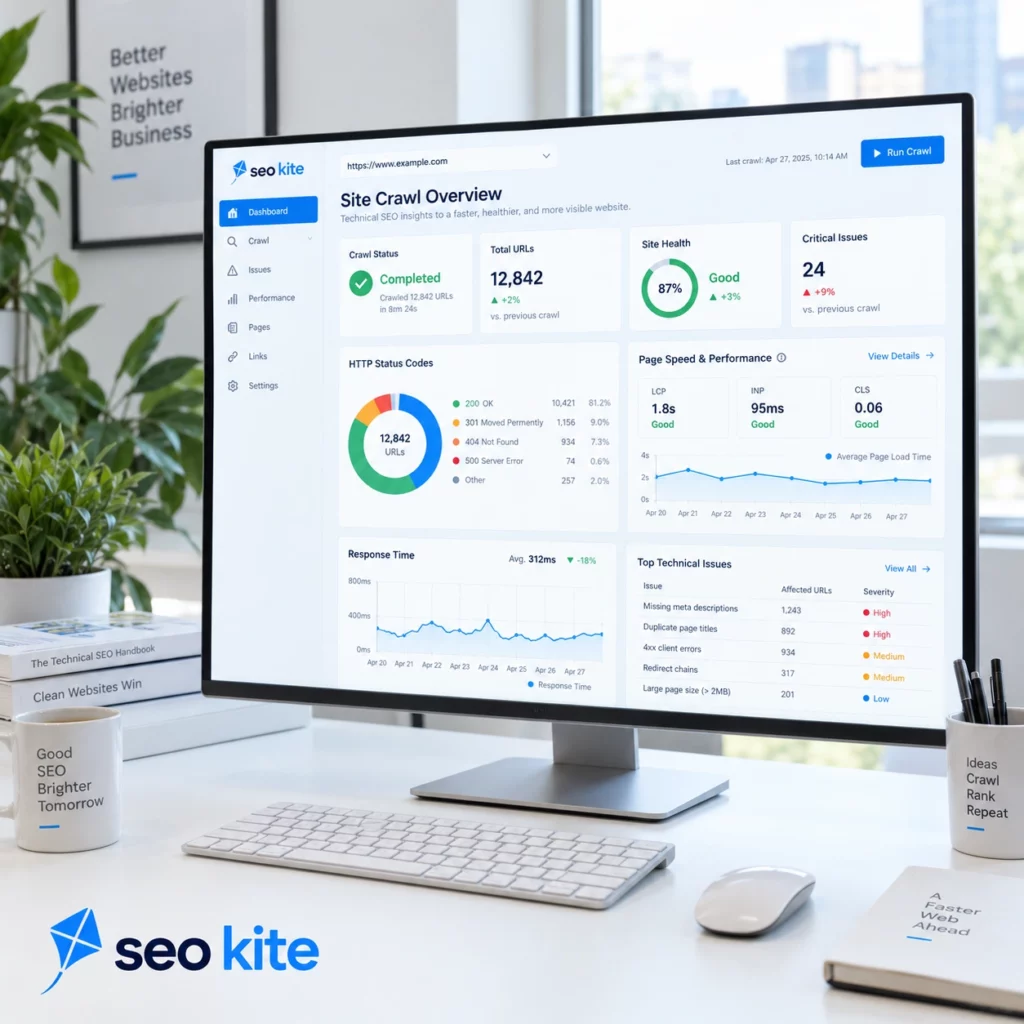
Modern casino lobbies heavily utilize JavaScript (React, Vue.js) to deliver real-time odds and dynamic game filtering. Standard cloud-based crawlers often fail to parse these client-side executed environments. Technical SEOs require heavy-duty desktop and enterprise crawlers, such as Screaming Frog SEO Spider and Sitebulb, configured specifically for JavaScript rendering.
These tools simulate Googlebot’s exact rendering process, capturing the rendered DOM (Document Object Model) and comparing it against the raw HTML response. This process exposes critical failures where primary navigation links or core game content become invisible to search engines. Furthermore, tools like Screaming Frog’s Log File Analyser ingest raw server logs to track exactly where Googlebot spends its crawl budget, immediately highlighting infinite parameter loops or server-side 5xx errors that block indexation.
Checking Redirects, Canonicals, and Internal Links
Automating structural audits prevents small technical regressions from destroying organic visibility. Deep crawls are essential for identifying frontend and backend discrepancies that commonly plague complex CMS setups, such as WordPress multi-site architectures.
A routine automated audit must successfully check for:
Redirect Chains
Identifying expiring promotional pages that bounce through multiple 301 and 302 redirects before resolving, which dilutes link equity.
Conflicting Directives
Spotting pages where a canonical tag points to URL A, but a meta robots noindex tag is accidentally applied via a flawed plugin update.
Front-End and Back-End Errors
Detecting broken internal links caused by HTML/CSS header alignment fixes gone wrong, or identifying server-side WordPress database issues (e.g., faulty password administration or caching timeouts) that throw transient 500-level errors to crawlers.
Backlink Analysis and Link Building Tools
Evaluating Referring Domains and Link Relevance
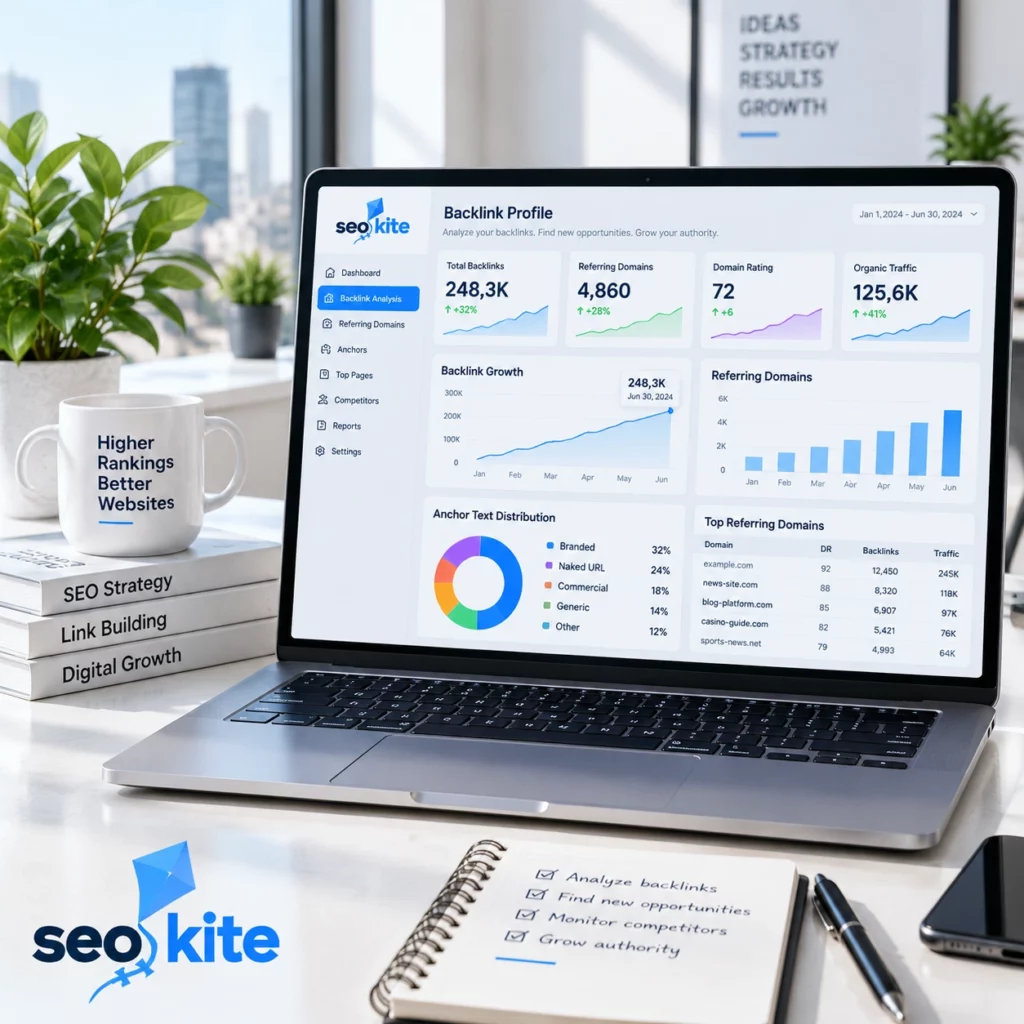
Link building in iGaming carries severe algorithmic risk, requiring forensic analysis before acquiring any placement. Tools like Ahrefs, Majestic, and Semrush form the core of the off-page evaluation stack.
Majestic is particularly valuable for its Trust Flow and Citation Flow metrics, which analyze the topical relevance of a domain’s link profile. A domain may possess a high Ahrefs Domain Rating (DR), but if its Majestic Topical Trust Flow indicates its authority stems from pharmaceutical or adult networks rather than sports, tech, or entertainment, the link is toxic. These tools allow SEOs to evaluate outbound link velocity, ensuring they do not purchase placements on domains acting as blatant link farms.
Finding Competitor Backlinks and Outreach Opportunities
Identifying where competitors acquire their links dictates your outreach roadmap. Ahrefs’ Link Intersect tool allows webmasters to input three to five competing domains to uncover websites linking to multiple competitors but not to their own site. These domains are highly likely to accept iGaming-related outreach.
To execute the acquisition, outreach tools like Pitchbox and BuzzStream automate the pipeline. They scrape contact information, manage complex email follow-up sequences, and track placement acquisition costs, allowing link-building teams to operate at a massive scale while maintaining personalized, negotiation-driven communication with webmasters.
Rank Tracking and SEO Reporting Tools
Monitoring Keyword Rankings Across Target Markets
Rank tracking in iGaming requires hyper-local precision and daily updates. Broad core updates and localized algorithmic shifts can decimate rankings overnight. Standard weekly tracking is too slow for proactive damage control.
Dedicated rank trackers like AccuRanker and Advanced Web Ranking (AWR) are the industry standards. They allow operators to track thousands of exact-match keywords across highly specific geolocation coordinates (e.g., tracking “sports betting app” specifically from IP addresses within Ontario, Canada). Furthermore, these tools track SERP features, alerting SEOs if a competitor captures the Featured Snippet or if a new localized review site suddenly intercepts a primary brand query.
Tracking Organic Traffic and Conversions
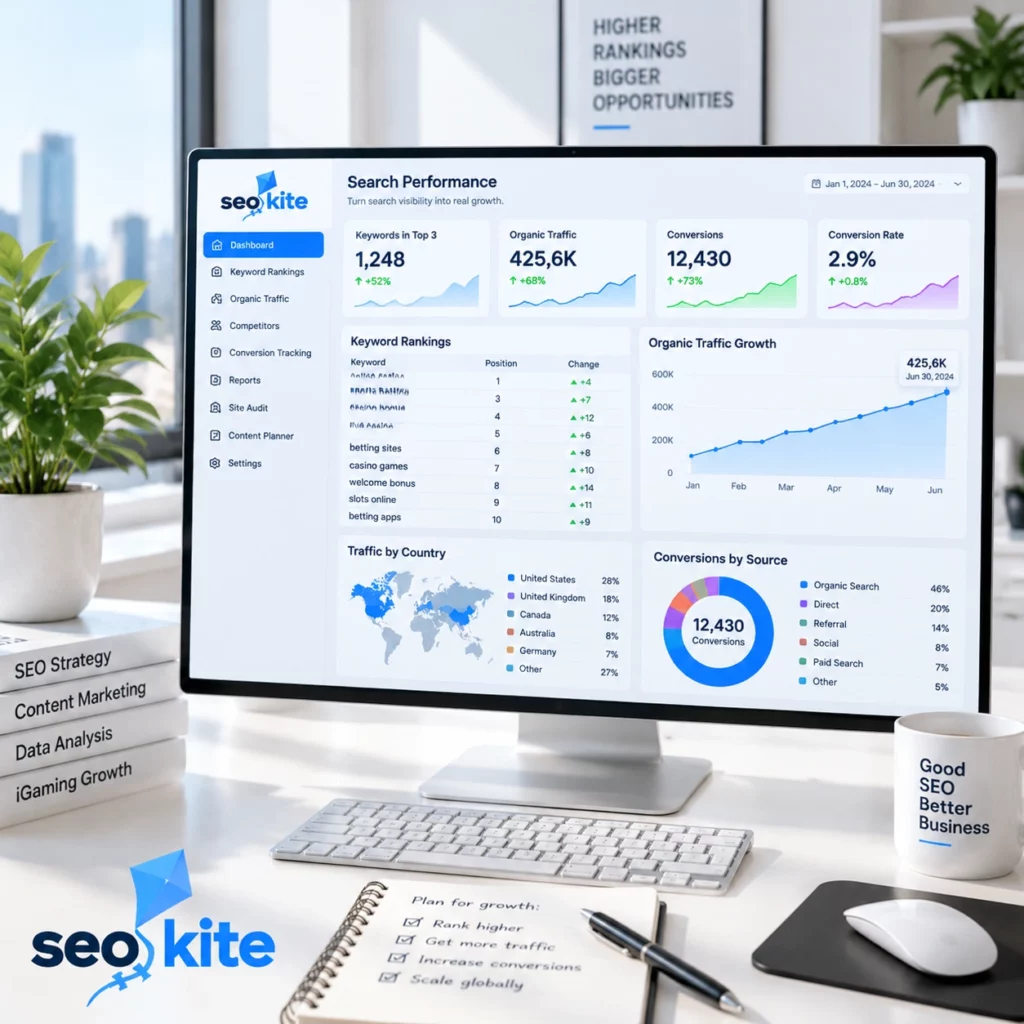
Traffic volume metrics mean very little without revenue attribution. The final layer of the tool stack integrates organic visibility with actual player value. This requires bridging Google Analytics 4 (GA4) and Google Tag Manager (GTM) with backend operator platforms or affiliate tracking software.
Using Postback URLs and custom event tracking, SEOs configure GTM to fire tags not just on clicks, but on completed registrations (First Time Depositors). By feeding this data into reporting visualization tools like Google Looker Studio, teams can build dynamic dashboards that cross-reference organic traffic by specific landing pages directly against Net Gaming Revenue (NGR) and Cost Per Acquisition (CPA), proving the exact financial ROI of the SEO campaign.
Frequently Asked Questions
The optimal stack blends enterprise crawlers (Screaming Frog, Sitebulb) for technical auditing, Ahrefs and Majestic for forensic backlink analysis, and AccuRanker for daily, hyper-localized SERP tracking. For content optimization and keyword clustering, tools like Surfer SEO and KeywordInsights are industry standards.
AI tools provide massive operational leverage for structuring and scaling content. LLMs like ChatGPT and Claude are best utilized to generate H1-H3 structural outlines, programmatically produce localized meta descriptions (e.g., translating intent into Dutch or Uzbek), and design highly specific 16:9 image generation prompts for custom blog visuals. They excel at workflow automation when paired with rigorous human editorial oversight.
Technical health monitoring and raw data processing should be completely automated. Using Python scripts or API integrations, teams can automate daily log file analysis, uptime and 5xx error pinging, keyword intent clustering, and broken link checks. Automating these repetitive diagnostics frees up resources for strategic link acquisition and high-level content strategy.
No. The iGaming sector is too competitive and technically complex for free tools like Google Search Console and basic browser extensions to suffice. While GSC is essential for first-party indexation data, competing effectively requires deep competitor backlink intelligence, JavaScript rendering capabilities, and programmatic NLP content analysis—all of which require paid, enterprise-grade software.