
Achieving sustainable organic growth in the iGaming sector requires navigating one of the most volatile and aggressively contested landscapes in search engine optimization. Online casinos, sportsbooks, and affiliate networks face strict regulatory mandates, stringent algorithmic evaluation under Google’s Your Money or Your Life (YMYL) standards, and intense commercial competition. Off-the-shelf SEO playbooks quickly fail in this vertical. Building long-term organic equity demands an enterprise-grade framework that unifies technical engineering, precise semantic intent mapping, rigorous editorial trust signals, and defensible authority acquisition.

SEO Goals for Operators and Affiliates
Defining Target Audiences and Business Outcomes
A cohesive iGaming SEO strategy begins by establishing clear boundaries between target audience segments and aligning them with tangible commercial deliverables. Casino and sports betting search queries span a broad spectrum, ranging from low-friction informational searches (e.g., “how to calculate parlay odds”) to high-intent transactional queries (e.g., “fast payout crypto casino”). Defining target personas requires analyzing player demographics, local regulatory permissions, preferred payment rails, and device usage across specific jurisdictions.

Business outcomes must transcend superficial traffic figures. For direct operators, the primary objective of organic search is driving First Time Depositors (FTDs), maximizing Player Lifetime Value (LTV), and lowering overall Customer Acquisition Costs (CAC) relative to paid channels. For iGaming affiliates, performance hinges on generating high-converting referral clicks, optimizing Cost Per Acquisition (CPA) payouts, and securing recurring Revenue Share models with trusted operator partners. Mapping these user pathways early ensures every published asset directly serves a conversion objective.
Setting Priorities and Performance Baselines
Setting strategic priorities requires isolating high-leverage activities from operational noise. Before deploying capital into content production or link outreach, SEO teams must establish rigorous performance baselines across four core pillars:
Technical Health & Indexability
Crawl efficiency, JavaScript rendering success, Core Web Vitals performance, and error rate baselines in Google Search Console.
Keyword Footprint & Intent Coverage
Share of Voice (SoV) across head terms, mid-tail review queries, and long-tail informational clusters relative to primary SERP competitors.
Off-Page Equity
Domain authority metrics, contextual referring domain counts, brand search volume, and historical link velocity.
Conversion Metrics
Baseline conversion rates from organic landing pages to registration, click-through rates (CTR) on affiliate tracking links, and baseline FTD volume.
Establishing these metrics prevents blind decision-making and provides a clear comparative benchmark following major technical updates or content overhauls.
Website and Competitor Analysis
Identifying Technical Barriers and Content Gaps
iGaming portals often suffer from severe technical bloat due to complex backend systems, real-time odds feeds, extensive game libraries, and multi-region subfolder setups. Auditing these platforms requires diagnosing critical barriers that prevent search engines from efficiently discovering and rendering key landing pages. Common technical impediments include client-side JavaScript execution failures, improper canonicalization of dynamic filter pages, orphaned promotional URLs, and slow server response times during high-traffic sporting events.
Concurrently, a thorough content audit evaluates topical completeness against top-ranking incumbents. Content gaps frequently manifest in missing subtopics, such as omitting specific game RTP statistics, ignoring localized deposit methods, or lacking detailed wagering requirement breakdowns. Identifying these omissions enables SEO teams to upgrade existing pages or build dedicated supporting subpages that systematically fulfill the user’s implicit search intent.
Finding Opportunities in Competing Search Results
SERP landscape analysis in the gambling niche reveals structural vulnerabilities in competitor strategies that agile brands can exploit. Instead of launching head-on campaigns against legacy domains holding established head-term rankings, analysts must evaluate the top 20 results for systemic weak spots.
Opportunities often arise where top-ranking incumbents feature outdated bonus information, display poor mobile user interfaces, rely on low-quality machine-translated content, or lack structured FAQ schema. Furthermore, analyzing competitor backlink profiles frequently uncovers unlinked brand mentions, broken inbound links pointing to 404 pages, or historical content gaps created when a competitor restructures their site URL schema without proper 301 redirects.

Keyword Targeting and Market Prioritisation
Selecting Markets by Demand and Competition
Expanding internationally without evaluating local market dynamics leads to inefficient capital allocation. Regulatory regimes, user search behavior, and financial return vary wildly between jurisdictions. SEO resources should be allocated using a tiered market strategy based on entry costs, search demand, and competitive density.
| Market Tier | Jurisdiction Characteristics | Search Behavior & Intent | Strategic Focus |
| Tier 1 (e.g., UK, USA, Australia) | Highly regulated, mature markets; extreme competition; high LTV. | Highly branded, specific commercial intent (“no wagering bonus”). | Enterprise Digital PR, brand protection, flawless technical UX, deep compliance. |
| Tier 2 (e.g., Brazil, Mexico, Poland) | Rapidly growing; evolving regulations; moderate entry costs. | Rapidly rising search volume; interest in localized payment rails. | Aggressive content scaling, native localization, mid-tier link building. |
| Tier 3 (e.g., Nigeria, Kenya, Emerging Asia) | Low barriers to entry; high search volume; lower player LTV. | Mobile-first queries, focus on football betting and light app downloads. | Programmatic SEO, high-volume long-tail targeting, lightweight site performance. |
Mapping Keywords and Search Intent to Pages

Keyword cannibalization is a widespread structural flaw across iGaming platforms. When multiple URLs compete for the same keyword cluster, search engines struggle to assign authority, resulting in volatile or suppressed rankings. Preventing this requires strict 1:1 intent mapping, where every unique semantic concept is assigned to a designated parent page.
Informational intent (“how does sports betting line movement work”) must be mapped to educational guides or blog hub posts. Commercial investigation intent (“best online slot sites UK”) belongs exclusively to high-level category review pages. Transactional intent (“sign up bet365 bonus code”) must target specific bonus or landing pages. Mapping keywords into organized silos ensures that internal equity flows logically from broad informational guides down to high-converting commercial hubs.
Technical SEO, Site Architecture, and Internal Linking
Making Priority Pages Accessible and Indexable
The primary objective of technical SEO in iGaming is ensuring search engine crawlers can reach, render, and index commercial priority pages without wasting crawl budget. When platforms utilize client-side JavaScript frameworks (e.g., React, Vue), search engine bots may delay rendering, leading to missed content updates or delayed indexation of new sports events.
To eliminate accessibility bottlenecks, implement Server-Side Rendering (SSR) or dynamic pre-rendering to serve static, fully populated HTML directly to search bots. Furthermore, strip tracking parameters from internal link structures, restrict search engine access to low-value search/filter results via robots.txt or canonical tags, and maintain flat crawl depth architectures where top-tier commercial pages are accessible within three clicks of the homepage.
Structuring Casino, Sportsbook, and Affiliate Content
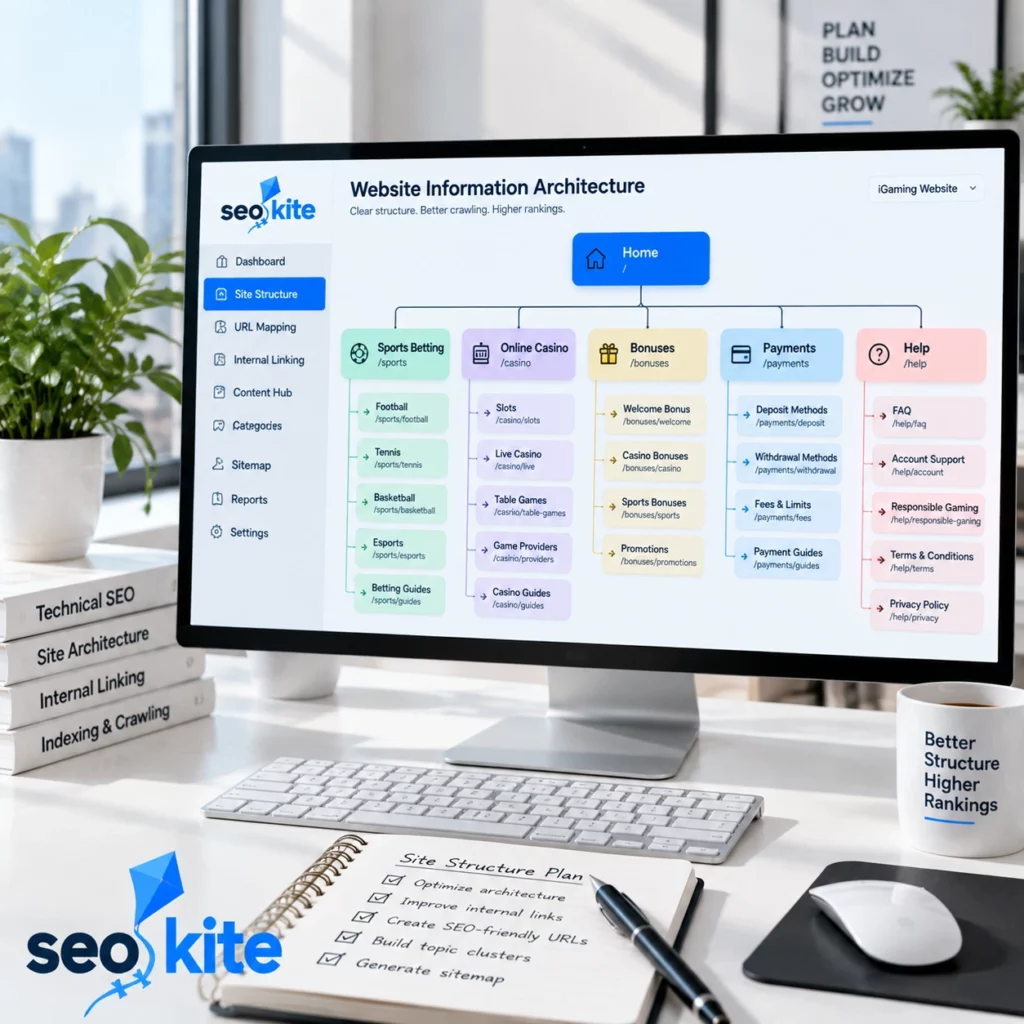
A logical taxonomy organizes content into thematic clusters that demonstrate deep topical authority to search engine algorithms. Site architecture should follow a strict hierarchical tree structure:
- Homepage
/- Casino Vertical
/casino/- Slots Hub
/slots/- Provider Filter
/provider/netent/ - Game Review
/game/starburst-review/
- Table Games
/table-games/- Blackjack
/blackjack/
- Sportsbook
/sportsbook/- Football Discipline
/football/- Premier League
/premier-league/
- Promotions & Bonuses
/promotions/
This structural separation prevents category blending and allows search crawlers to contextualize relationships between parent topics and niche subtopics.
Connecting Landing Pages with Supporting Content
Internal linking distributes PageRank and establishes semantic relevance throughout the domain. High-authority informational hub pages (e.g., “Ultimate Guide to Online Roulette”) should feature contextual in-content links pointing down to specific commercial hubs (e.g., “Top Real Money Roulette Casinos”).
Conversely, deeper commercial pages should link laterally to relevant supporting assets, such as software reviews or payment method guides. Utilize descriptive, varied anchor text that incorporates partial-match LSI keywords (e.g., “view fast withdrawal options” or “check high RTP slot titles”) while avoiding mechanical exact-match anchor manipulation across footer link blocks.
Content Strategy for Traffic and Conversions
Planning Landing Pages, Reviews, and Betting Guides
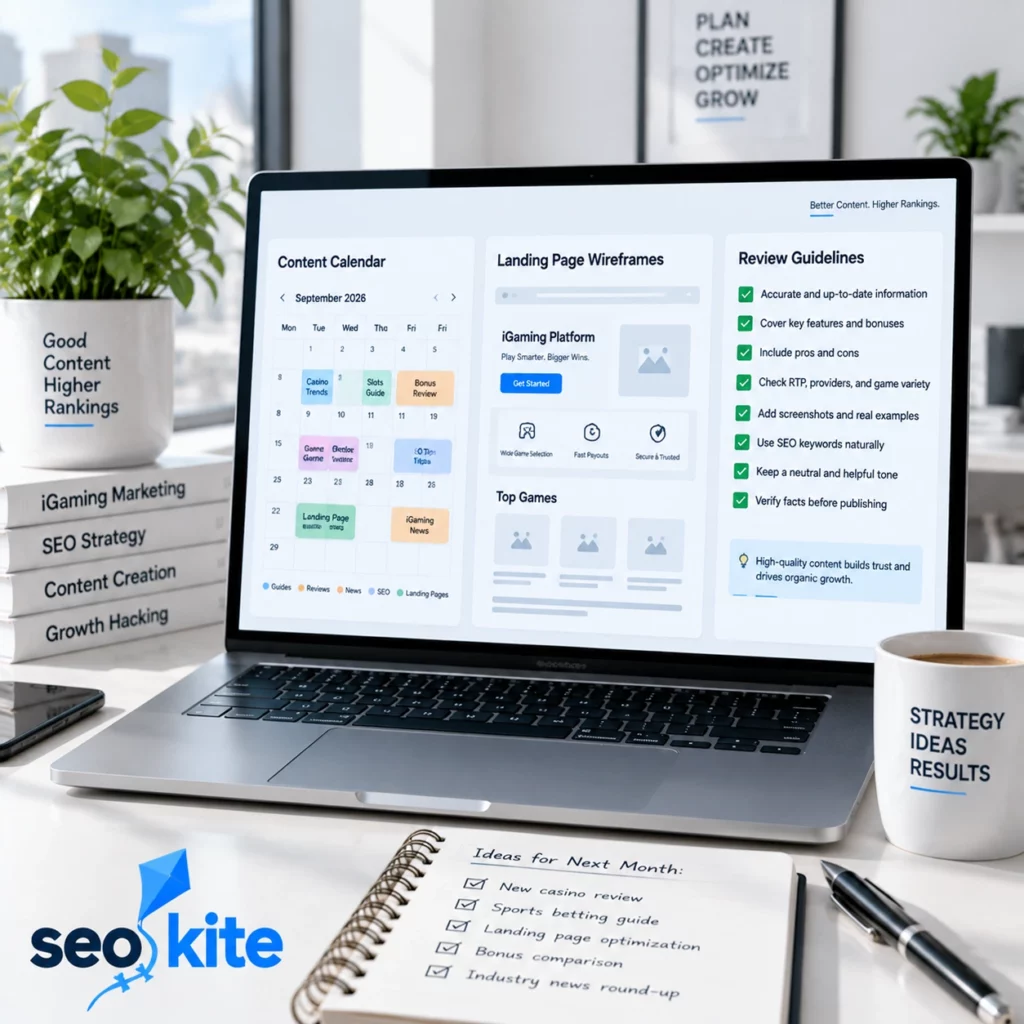
Content production in the gambling niche must satisfy both search engine quality algorithms and conversion rate optimization (CRO) principles. Templated, thin, or AI-generated text published without editorial oversight inevitably triggers quality demotions.
Commercial landing pages and casino reviews require comprehensive content frameworks:
Above-the-Fold Value
Clear, factual summaries of key bonus terms, licensing details, deposit minimums, and direct call-to-action (CTA) buttons.
Structured Data Tables
Clean HTML comparison tables highlighting withdrawal speeds, accepted currencies, game software providers, and mobile compatibility.
In-Depth Analysis
Objective commentary covering account setup procedures, mobile app performance, customer support response times, and game portfolio variety.
Clear Terms Disclosures
Explicit, un-hidden explanations of wagering requirements, game weighting rules, and expiration limits.
Building Trust Through Original Evidence
Google’s E-E-A-T (Experience, Expertise, Authoritativeness, and Trustworthiness) guidelines apply strictly to YMYL finance and gambling query spaces. To build durable search trust, publishers must provide original, verifiable evidence of hands-on platform evaluation.
Publishers should include original high-resolution screenshots of actual account dashboards, document real deposit and withdrawal processing times, and detail first-hand testing of customer service channels. Citing active gambling licenses (e.g., UKGC, MGA, Curacao eGaming), displaying certifications from independent testing agencies like eCOGRA or iTech Labs, and publishing clear editorial author bios written by verifiable industry experts further validate content authenticity.
Keeping Offers and Platform Information Current
iGaming content decays faster than standard editorial content. Welcome bonuses change, promotional codes expire, software providers update game libraries, and regulatory changes alter operational status overnight. Displaying outdated information harms user trust and increases bounce rates, signaling poor page quality to search algorithms.
Establish a systematic content maintenance workflow:
Weekly Offer Audits
Verify that all featured headline bonuses, promo codes, and minimum deposit terms match live operator terms.
Quarterly Content Refresh Cycles
Update ranking tables, refresh user reviews, replace broken media assets, and check outbound tracking link paths.
Timestamp Accuracy
Utilize
lastUpdatedstructured schema to communicate recent editorial reviews to search engines without deceptively altering publishing dates without substantive edits.
International SEO and Localisation
Adapting Content and Offers to Each Market
Global iGaming expansion requires localized adaptations tailored to regional player behaviors. Word-for-word translation of English source content ignores local terminology, regulatory restrictions, and preferred gaming formats.
Effective localization adapts the core commercial product to match market expectations:
Terminology Adaptation
Use regional vernacular (e.g., “pokies” in Australia, “slots” in the US, “spielotheken” in Germany, “tragaperras” in Spain).
Payment Method Integration
Highlight regional payment rails prominently (e.g., Pix in Brazil, Interac in Canada, MPesa in Kenya, Trustly in Sweden).
Market-Specific Offerings
Prioritize sports and games native to the region (e.g., Cricket and IPL betting in India, College Football in specific US states, Serie A in Italy).
Coordinating Regional URLs, Hreflang, and Canonicals
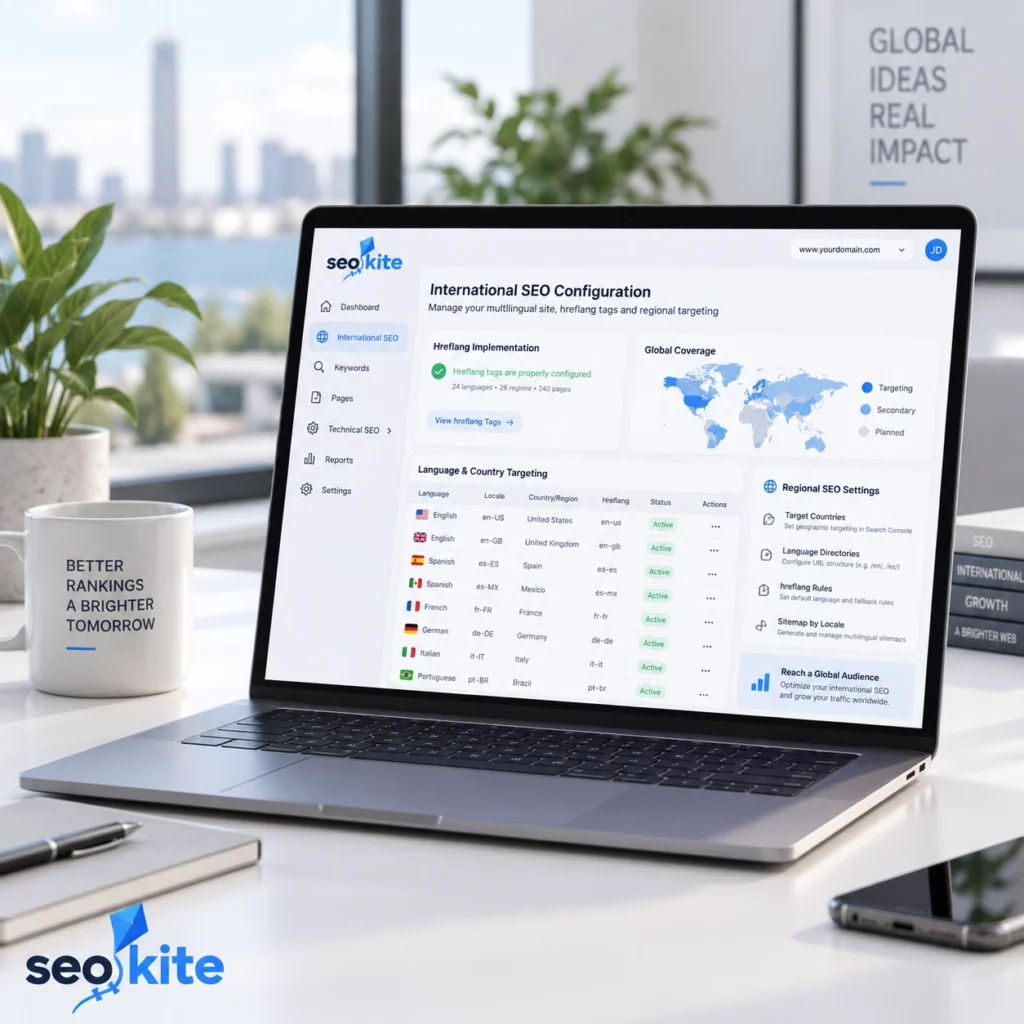
International architecture must explicitly guide search engines to the correct language and regional subfolders, subdomains, or country-code top-level domains (ccTLDs). Misconfigurations frequently lead to regional duplicate content issues or wrong language pages ranking in local SERPs.
Enforce the following architectural rules across all international deployments:
Self-Referencing Canonicals
Every regional page variant must contain a self-referencing canonical tag (e.g.,
/br/cassinomust canonicalize to/br/cassino, not to the English root/casino).Reciprocal Hreflang Mapping
Every localized page must include complete hreflang tags pointing to all language/region variants, including a designated
x-defaultlanding page for unmatched regions.No Forced IP Redirects
Avoid automatically redirecting users or crawlers based on IP geo-location. Allow search bots to discover all regional subfolders, and present human users with a discrete manual language selector.
Link Building and Authority Development
Earning Relevant Links Through Outreach and Digital PR
Acquiring high-authority backlinks in the gambling vertical presents unique operational challenges, as mainstream media publications maintain strict editorial policies regarding outbound links to real-money gaming sites. Overcoming these barriers requires sophisticated Digital PR campaigns and value-driven outreach strategies.
Effective link acquisition strategies include:
Data Journalism & Industry Reports
Publishing proprietary statistical analysis regarding sports performance, gaming odds probabilities, or regional gambling industry economic trends to earn organic citations from news media.
Tangential Niche Outreach
Securing editorial placements on sports news portals, tech blogs (covering software/blockchain technology), personal finance portals, and regional lifestyle magazines.
Sponsorships & Event Partnerships
Partnering with sports teams, esports tournaments, or industry conferences to secure authoritative brand mentions and local editorial links.
Evaluating Link Quality and Spam Risks
Not all backlinks pass positive equity; acquiring links from low-quality link networks, compromised domains, or obvious link farms exposes the site to algorithmic devaluation or manual spam actions. Relying purely on third-party metrics like Domain Rating (DR) or Domain Authority (DA) is insufficient, as these numbers can be artificially inflated through automated link loops.
Before acquiring any link placement, execute a forensic analysis verifying that the referring domain maintains steady organic search traffic, ranks for non-branded keywords, possesses a clean historical backlink profile free of pharmaceutical or adult spam, and maintains a reasonable ratio of inbound to outbound contextual links.
Implementing and Measuring Your SEO Strategy
Prioritising Tasks, Resources, and Responsibilities
Executing an enterprise iGaming SEO strategy requires coordinating cross-functional efforts across software engineering, content generation, outreach teams, and legal compliance officers. Deploying an impact-effort prioritization framework prevents operational stagnation.
| Strategic Task | SEO Impact | Resource Requirement | Lead Department |
| Fixing SSR/JavaScript rendering blocks on main category hubs | High | High | Software Engineering / Technical SEO |
| Consolidating cannibalized bonus review pages | High | Medium | Content / On-Page SEO |
| Deploying self-referencing canonicals and correct hreflang | High | Low | Technical Webmaster Team |
| Scaling Digital PR campaigns for Tier 1 market acquisition | High | High | Digital PR / Link Building Outreach |
| Updating expired promotional terms and broken tracking links | Medium | Low | Editorial Content / Compliance |
Tracking Conversions and Adjusting Your Roadmap

SEO roadmaps must remain flexible, adapting dynamically to algorithmic core updates, competitive shifts, and regulatory changes. Establishing robust conversion tracking pipelines ensures that campaign momentum is measured by financial returns rather than purely technical activity.
Deploy custom Google Tag Manager (GTM) event triggers to monitor outbound affiliate tracking link clicks, registration form starts, and deposit page visits. Integrate backend affiliate Postback APIs or CRM data into Google Looker Studio dashboards to correlate organic landing page traffic directly with net revenue metrics (FTDs, NGR). If a core update impacts traffic to specific category hubs, analyzing this revenue performance data enables teams to reallocate editorial and link-building resources toward resilient, high-converting assets.
Frequently Asked Questions
Operators focus heavily on brand protection, technical platform scalability, user retention, and maintaining rank dominance for their proprietary brand keywords. Their content revolves around game lobbies, live odds interfaces, and user account management. Affiliates, conversely, focus on unbranded commercial terms (“best online casinos,” “no deposit bonus codes”) and comparison reviews. Affiliates must rely more heavily on aggressive non-branded content production, comparison matrices, and external authority building to capture search traffic before redirecting users to operator partners.
A new domain should launch by targeting a single jurisdiction or a tightly defined regional cluster (e.g., one Tier 2 or Tier 3 market) before expanding internationally. Attempting to target multiple Tier 1 markets simultaneously dilutes domain equity, strains content budgets, and complicates technical architecture. Establishing topical authority, generating initial FTD revenues, and proving technical stability in one primary market provides the financial and authority base needed to scale subfolders into secondary markets successfully.
In mature Tier 1 markets, allocate roughly 40% of the budget to high-authority link acquisition and Digital PR, 30% to native expert content production and compliance maintenance, 20% to technical engineering and platform optimization, and 10% to rank tracking and software tooling. In emerging Tier 2 or Tier 3 markets where authority thresholds are lower, shift capital toward high-volume content localization, programmatic landing page creation, and core technical infrastructure.
On a newly established domain targeting competitive commercial keywords, an iGaming SEO campaign typically requires 6 to 12 months to achieve meaningful indexation, overcome sandbox delays, build baseline authority, and deliver consistent FTD conversions. On established domains executing technical remediation and content consolidation, initial ranking improvements and traffic recovery can materialize within 8 to 16 weeks following major crawler re-evaluations.